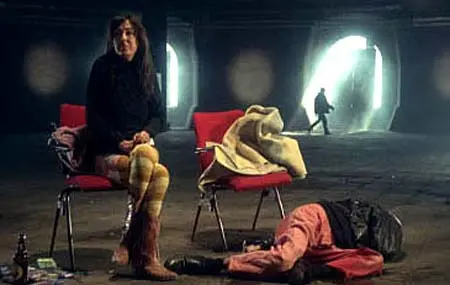
Driven by ideals, filmmaker Cyrus Frisch wants to make a film that ends the stream of violence and misery on television. He wants to obtain this by making a film that trespasses the acceptable behaviour in order to make clear where that border precisely lies. He begins to shoot brutal scenes with social outcasts he met on the streets. When a first edit of these materials is screened on the largest documentary festival in the world, the public and critics are exclusively positive. The filmmaker reacts with outrage: he clearly didn’t succeed in his mission and turns to the devil for help. The devil convinces him to go even further and to even destroy the lead characters. Without shame, this film shows the exploitation of the sorrow of the actors and leaves the innocent viewer behind in despair. Is the viewer an innocent voyeur and the film maker an amoral sensational media figure, or is the viewer a passive accomplice?
Cyrus Frisch
Frisch is known to have made the first fictional feature film shot with a mobile phone: Why Didn’t Anybody Tell Me It Would Become This Bad in Afghanistan, that premiered at major film festivals: the International Film Festival Rotterdam 2007,Tribeca Film Festival 2007, the San Francisco International Film Festival 2007, Pesaro 2007, and several others. According to Dutch newspaper Trouw, Frisch pinpoints the insanity of western society nowadays with this film as precisely as Polanski did in the ’60s with Repulsion. I After graduating from Dutch Film Academy in 1992 he was nominated for the Grolsch Award, one of the most prestigious film awards in the Netherlands.