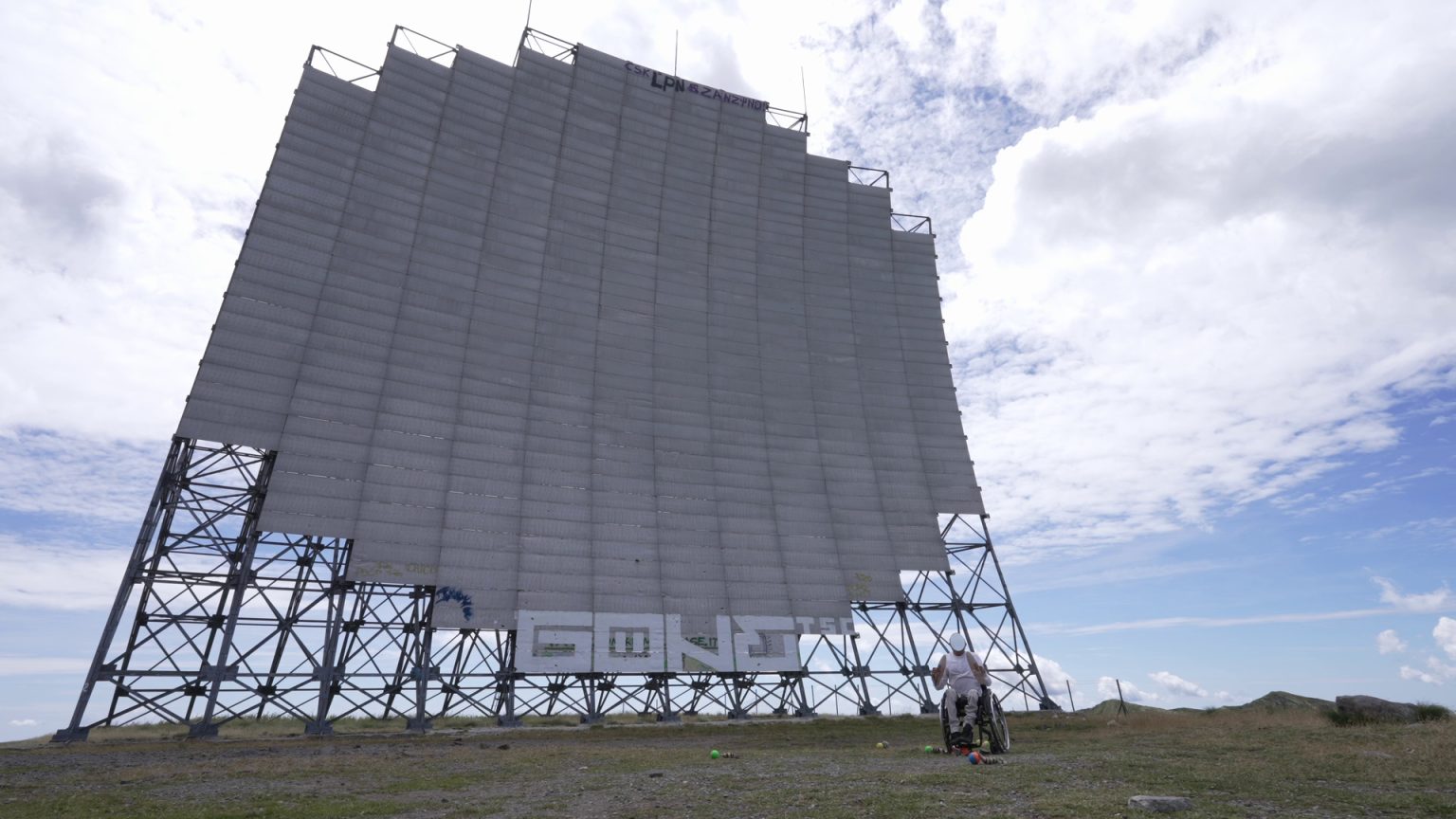
An abandoned NATO base built during the Cold War on a mountain pass linking three valleys to each other in north Italy. Old business lines, passageways and other morphological peculiarities. Sound waves, cymbal vibrations and fake animal puppies mark an imaginary sense of the time passing. The landscapes around take on ascetic and fleeting colours. Those zones that were once controlled from now on are a way out. The senses conjugate an escape trajectory from the body to the sky. The video consists of three chapters. Each of them begins with a description of emotions.
The story develops through symbols concerning identity, presence, existence and condition. Documentary scenes alternate with anatomical frames. Keeping direction straight on, the protagonist discovers new territories—nowhere is everywhere.
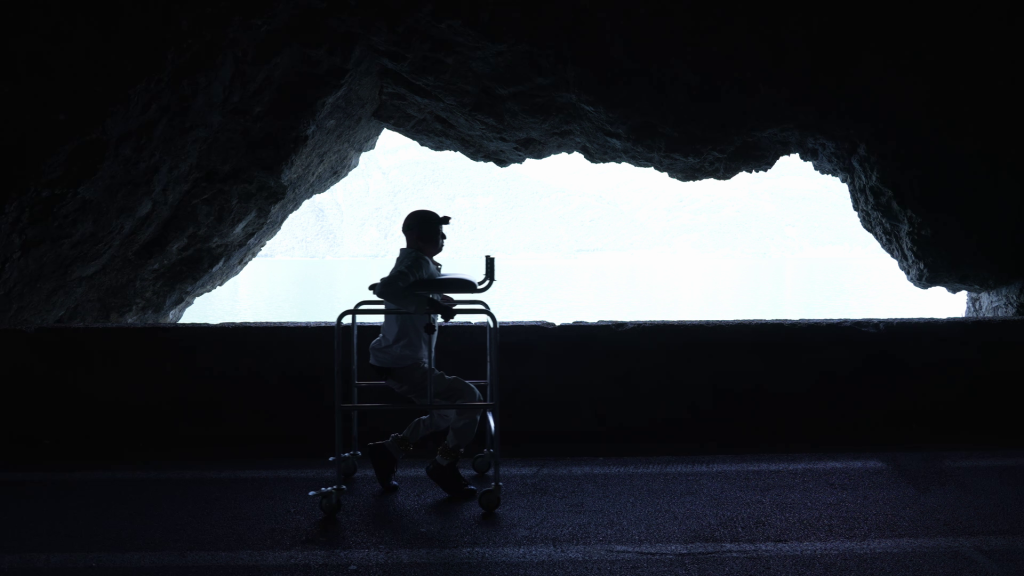
He trespasses and tracks them down with his orthopaedic devices, migrating from a tunnel’s darkness to the light, like a miner who reaches the surface after spending endless moments in the depths of the earth where the rumble of metal makes its way through the rocks.
Nicola Fornoni
Nicola Fornoni (Brescia, Italy, 1990). Although suffering from severe Scleroderma since 2001, he incessantly produces performance works, live and for video, which are captivating for their symbolic imagery and visual impact. His poetics stems from a committed, sincere quest for connectivity and clusters themes of otherness, respect, union, inclusiveness and accessibility. His oeuvre results from a thoughtful process to counteract biases and stigmatisation about differences – real or imagined – presented as a negation of identity and, thus, a motive for potential discrimination.